“The elderly have a duty to die.“
This was a debate resolution in my early years as a debate coach. It was as shocking as it was thought provoking.
I am reminded of this resolution during this CV-19 crisis. It is the invisible shield folks are using to exhort others, “don’t panic.” Behind the “it only affects the old” and those with “underlying health issues” are several very shocking assumptions.
Ageist
I’ll begin with the assumption that it’s ok to sacrifice the elderly.
The woman who raised me – and continues to serve as my touchstone – is my grandmother, age 87. Thank God that from her, I learned to listen to my body, care for my health, and to advocate for my care – lessons I pass on to my 4 daughters almost daily.
Do you truly believe her life is worth less? Your bundle of joy is untapped potential. My grandmother is almost 9 decades of proven worth. The wisdom in her pinky beats the crap out of your honor student. (That bit of spunk is gratuitously offered in honor of my grandmother, who has no intention of letting this bug bring her down.)
Seriously, though. The CDC defines “older” as over 60 – not 80 – and recommends social distancing. Let’s break this down: (1) This age group means parents, teachers, leaders in every walk of life: business, politics, education, healthcare, community, faith. (2) Social distancing doesn’t mean panic; it simply means stay at home & avoid crowds.
Government leaders in Italy & Iran are sick (some have died). Here in the US, religious & political leaders have been significantly exposed. It may be a funny meme to wish illness on your political enemy, but really, potential large-scale illness among our leaders would wreak havoc on us socially, politically, and economically.
I’ll throw into the mix that following a bright-line age rule for dismissing risk is short-sided. Please take a moment to research the 20yo woman in Missouri, the 50yo Westchester lawyer, the 40yo Wilton man. Even infants have contracted the virus. Moreover, there is recent indication out of Shenzhen that youth become more at risk as the virus becomes community & intrafamily spread. They may not be symptomatic (or mildly so), but they are still carriers. This is the group we are ignoring – asymptomatic or mildly symptomatic vectors, who shed the virus without any knowledge.
Placid acceptance that the elderly (remember: 60+) will die amounts to flat-out ageism and is immoral.
Ableist
It’s also wrong to dismiss concerns about appropriate preparations because only those with “underlying conditions” are susceptible to the virus.
The claim that the virus only affects those with pre-existing medical conditions is a hybrid of patient-blaming and denial of reality. This is not a lifestyle-related disease. While the virus may find a cozy home in a host with a weakened system for whatever reason, this is not the patient’s fault. Again, are we willing, as a society, to placidly accept a death sweep of the infirm?
Let’s consider also the reality of underlying medical conditions: chronic heart, lung, or kidney conditions, or those with compromised immune systems. This means cancer patients and those with fairly typical chronic conditions like asthma, diabetes, high blood pressure. And that only accounts for those of us who know we have an underlying condition. Most of us only become aware of an underlying medical condition when a physiological weakness is damaged to the point of developing a diagnosable symptom. How much are you willing to bet you’re “100% healthy” right now?
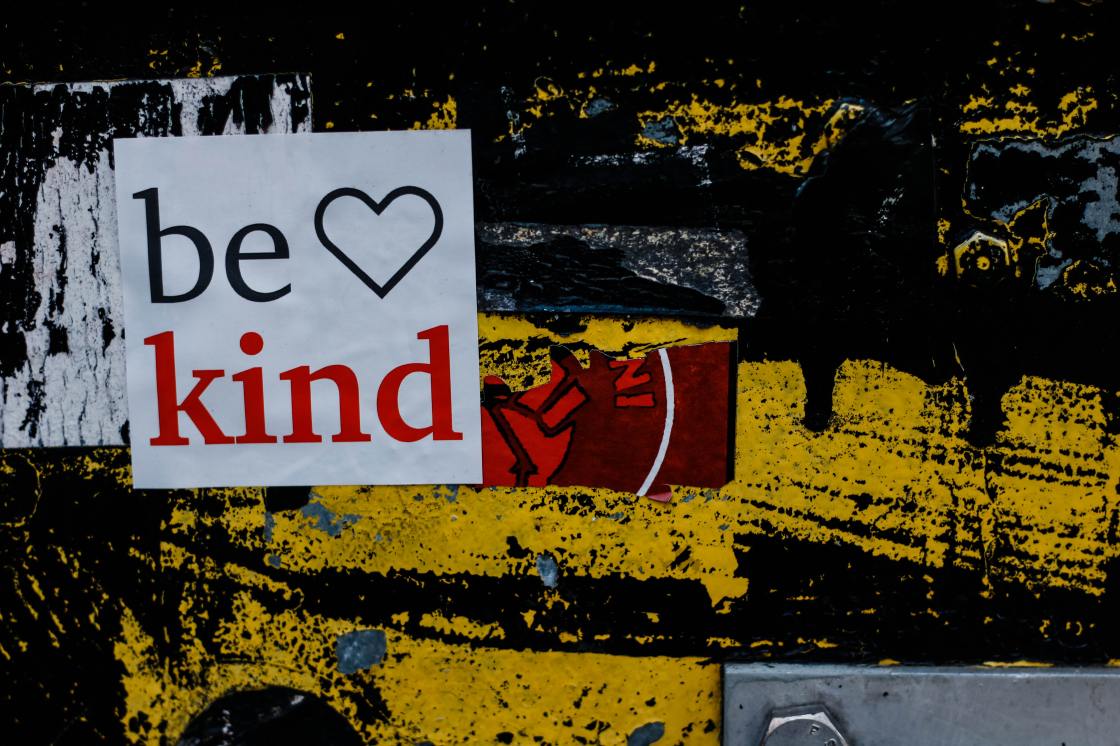
Those of you with “Be Kind” stickers, pay attention: another’s health may rest in your (or your child’s) hands. Regardless of age, some carriers will be asymptomatic (usually only temporary) or only mildly sick. Folks with no or mild symptoms tend not to self-isolate and instead continue to shed the virus as they go about their day – which can be in large groups or in relatively isolated conditions like home. Keep in mind that 20% of those who contract CV-19 will need help breathing, which means ICU care (intubation, oxygen therapy). For weeks.
This leads us to healthcare systems – beds & staff. Yes, the flu is bad. And currently rampant. Still, the flu has an R0 of 1.3 (infection rate: a single person will infect 1.3 others). Depending on your source, CV-19 has an R0 of 2.2-4. Much more contagious than any flu strain (and without vaccines or antiviral drugs). Imagine unknowingly being contagious and in contact with people or surfaces many others will touch. Doesn’t take a rocket scientist to conclude the R0 changes upward in that context. I do not want to be part of the trend that forces a selection protocol: with limited resources, who gets care?
At a minimum, we have a pneumonia-like virus that is highly contagious and will require significant medical intervention for about 20% of patients. This will delay care for non-virus patients and other medical events. You know, like, actual emergencies – stroke, heart attack, accidents. Equally important, it puts our healthcare workers in danger – overworked, understaffed, sick – and our facilities overburdened – not enough beds, meds, or equipment. Oh, and recent reports indicate the virus is airborne to a certain degree so think about shared, enclosed spaces.
Think & Act As a Community
It’s ironic that so many are chafing at the possibility of social isolation. It seems to me that to be social is to care about & enjoy the company of others. Accordingly, is it really a hardship to temporarily change habits & events to protect others? Yes, this means work, school, and large gatherings.
The thing is, this virus is new (since mid-December 2019). This means we do not have enough information to compare it to anything, much less “the flu.” Most lay conclusions are based on outdated information and erroneous comparisons of data sets. For instance, did you know there are least 2 mutations now identified (S & L strains)? The newer strain, “L,” is more aggressive. Mutation is expected in viruses – this is important information for generating vaccines & understanding potential reinfection (same is true for seasonal flu). Testing will help track this. Also, one cannot compare the average number of deaths from a well-established virus over the course of its 6-month season in country A to the mortality rate from country B over the course of 4-8 weeks (generously) from a novel virus that has only been in existence in this world maybe 12 weeks.
Our federal government has botched its response on every level – most tragically on transparency. (Because even if the government doesn’t act, I feel confident in my own decision-making so long as I have access to accurate, timely information.) This is the true source of panic: spinning instead of informing.
Preparedness curbs panic. Information is the first step to being prepared. While we are still learning about CV-19 from the virus itself, we also can learn from the responses by other countries: what worked & what hasn’t, under what circumstances & timelines. Where I live, we learn to be prepared for “weather”. One particularly harsh lesson was during a blizzard a few years ago that shut down roads, electricity, cable & cell service for upwards of a week. We learned to make sure our generator is working, propane full, and cupboards stocked before any storm. No panic. In fact, stocking the wine reserves & anticipating a warm fire in the fireplace is downright enjoyable. I don’t fear the storm because I am prepared. I don’t fear CV-19 because I am prepared.
The thing is, during this healthcare crisis we need to step outside our personal and family bubbles: we must think & act like a community. Not like rabid individuals – whether in denial or hoarding TP. Preparedness is not only about your household. It is about others. It is not about stopping the virus. It is about slowing and tamping down the potential spike that collapses our healthcare system and puts everyone in danger. Once we see documented community spread, it will be too late.
Being prepared is not panic. Being prepared is being kind.
Because nobody has a duty to die.
 vidamixta
Great article Jennifer. And I thank Chelly for raising You so well.
LikeLike